Drone as First Responder Programs in 2026: Policy Language, Airspace Waivers, and Community Pushback
More than 1,000 agencies hold FAA waivers for drone as first responder programs, yet Part 108 is unfinished and local rules lag. What policy language should say.
By IPA-IAC · 5 min · 10 November 2026
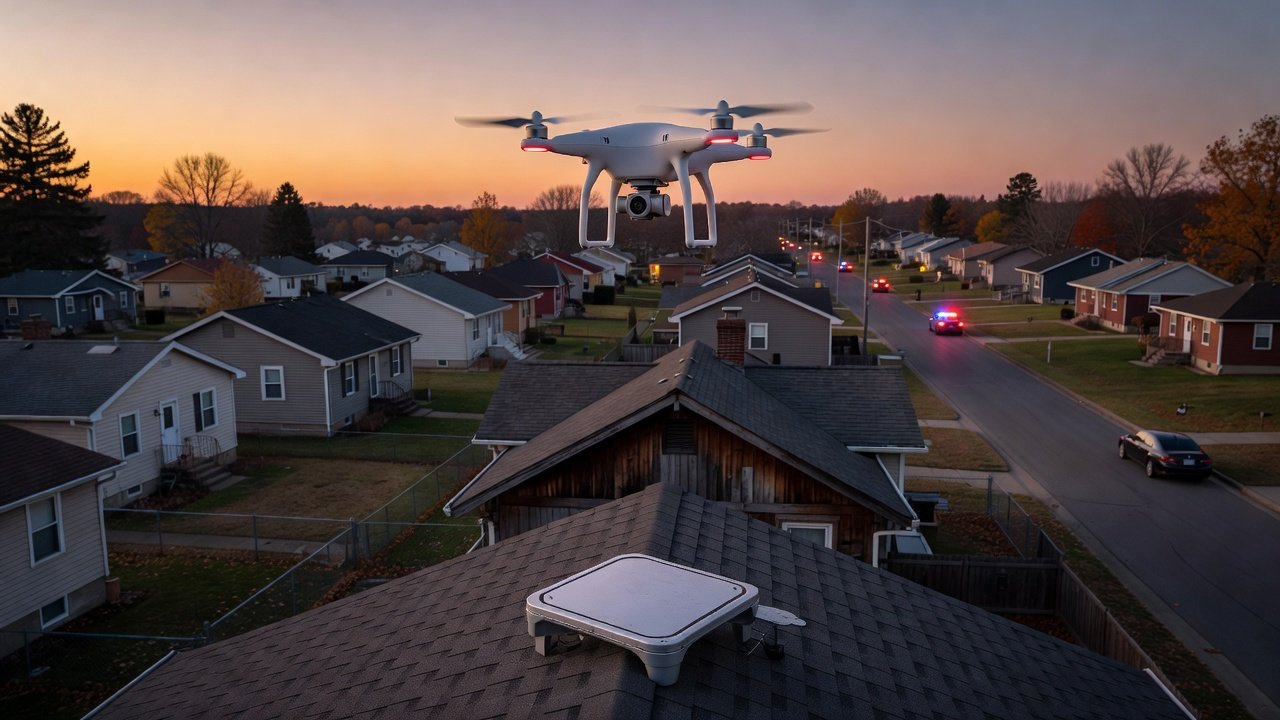
A drone as first responder program works because it removes a person from the launch decision: a 911 call comes in, a dock opens, and an aircraft is overhead in under two minutes, with no pilot on the roof. That same design is what draws scrutiny. When the aircraft launches automatically, the agency’s written policy is the only thing standing between a response tool and a persistent aerial camera over residential streets. In 2026, the airspace permission is no longer the hard part. The policy is.
The waiver path got easy; the rulebook did not
The FAA streamlined its process for public-safety beyond-visual-line-of-sight operations in April 2025. According to the Electronic Frontier Foundation’s analysis of an FAA records release published in July 2026, the agency approved Part 91 waivers for more than 1,000 public-safety agencies between April 2025 and February 2026, more than it had granted in the roughly seven years before. Approvals last 48 months, and the first expire in spring 2029, so renewal decisions will land in front of city councils sooner than many programs expect. These figures come through EFF and trade-press reporting on the FAA release, not an FAA publication, so cite the underlying records if you rely on them.
The details matter for planning. Most applicants use the lower tier, with flights shielded at or below 200 feet; a smaller group with FAA-accepted detect-and-avoid systems fly at up to 400 feet. The expedited waiver assumes one remote pilot per aircraft, and one pilot supervising several drones still requires case-by-case review. The FAA has no dedicated DFR rulebook, so each applicant defines its own operations.
That is why the pending Part 108 rule matters. The FAA proposed it in August 2025 to make routine beyond-visual-line-of-sight flight an authorization rather than a waiver. Trade reporting places the final text at the White House’s regulatory review office since July 10, 2026, with no confirmed publication as of this writing. A contested right-of-way provision, opposed by general aviation groups, is the reported sticking point. Agencies should check the Federal Register rather than assume a date.
What Congress has and has not done
Despite frequent references to “pending federal legislation,” no bill in the 119th Congress sets use standards for DFR programs. Two measures touch the field from the funding side. The Drones for First Responders Act (H.R. 3786, introduced June 2025) would impose duties on Chinese-made drones and direct revenue to grants for U.S.- and ally-made aircraft. The DRONE Act of 2025 would make drones an allowable expense under Byrne JAG and COPS grants. Neither addresses data retention, flight logging, or the scope of permissible use. Those decisions remain with state legislatures and local governing bodies.
Where community pushback is actually concentrated
Recent local fights share a pattern. In Minneapolis, a proposed 75-day Skydio trial drew packed council hearings, with residents raising concerns about the vendor’s federal contracts. Bridgeport, Connecticut, saw a council committee vote overwhelmingly against recommending a Flock Safety drone contract. Syracuse and Waikiki have faced questions about what footage is kept and who sees it. In New Orleans, the ACLU of Louisiana and Eye on Surveillance argued that publicly available evidence does not support claims about staffing efficiency or de-escalation.
The civil-liberties position is not new. The ACLU’s 2023 white paper, “Eye-in-the-Sky Policing Needs Strict Limits,” urges communities to hold off on deployment until laws govern it, and offers guidelines for those already flying. We could not confirm a specific retention window in that paper or in the proposals we reviewed, so the numbers below are drafting suggestions, not citations.
Policy language that survives a council hearing
Agencies that clear the approval stage tend to have answered the same five questions in writing.
1. What triggers a launch
Define the call types that authorize a flight, and state whether low-level calls are included. EFF has pointed to Chula Vista’s low-level call volume as a reason to specify this. A policy that says “any call where aerial view may help” invites mission creep.
2. What the aircraft may not do
Prohibit routine patrol, flight over lawful protests absent a defined threat, targeted tracking of individuals without a warrant or exigency, and use of face recognition. If a vendor’s platform includes plate reading, the policy should say whether the feature is enabled and under what conditions.
3. How long footage is kept
Set a default retention period for footage with no evidentiary value, set a separate hold for footage tied to a case, and require documented deletion. A short default, measured in days rather than months, is easier to defend than an open-ended archive. Decide it before the first flight.
4. What is public
Publish flight logs: time, call type, flight duration, and outcome. EFF recommends public flight logs and public input before acquisition; California’s AB 481 already requires community review of certain surveillance equipment. Annual reports that include missions flown, arrests linked, and complaints received give oversight bodies something to evaluate.
5. Who audits
Assign an owner outside the operating unit to review logs on a schedule, and state what happens when a violation is found. Vendor-hosted systems need contractual audit access and deletion obligations, not just a policy statement.
Evaluating the response-time claims
Vendors and agencies cite impressive response numbers. Chula Vista, widely cited as the model program, reported passing 25,000 missions in May 2026 with the drone arriving first on 17,170 of them, according to trade reporting. Orlando’s trial reportedly had the drone arrive first on about a third of calls. Those are agency or vendor-sourced figures. What they do not show is whether faster arrival changed outcomes, such as fewer use-of-force incidents or higher clearance rates. Programs that want durable support should commit to outcome measurement before launch and publish the results, including unfavorable ones.
The practical takeaway
If your agency holds or is seeking a waiver, treat the FAA permission as the least contested step. Draft the use policy, retention schedule, and public reporting plan first, run them through a public hearing, and then buy the aircraft. Build the 2029 waiver renewal into your oversight calendar now, and watch for the final Part 108 text, which may change both the airspace process and the documentation you are expected to keep.