Organized Retail Crime Analytics in Q4: How Agencies Use Data Sharing and Cameras to Track Holiday Theft Rings
Agencies link theft ring cases through shared incident data, retailer video, and plate readers. What works, what the evidence shows, and the privacy limits to set.
By IPA-IAC · 5 min · 3 November 2026
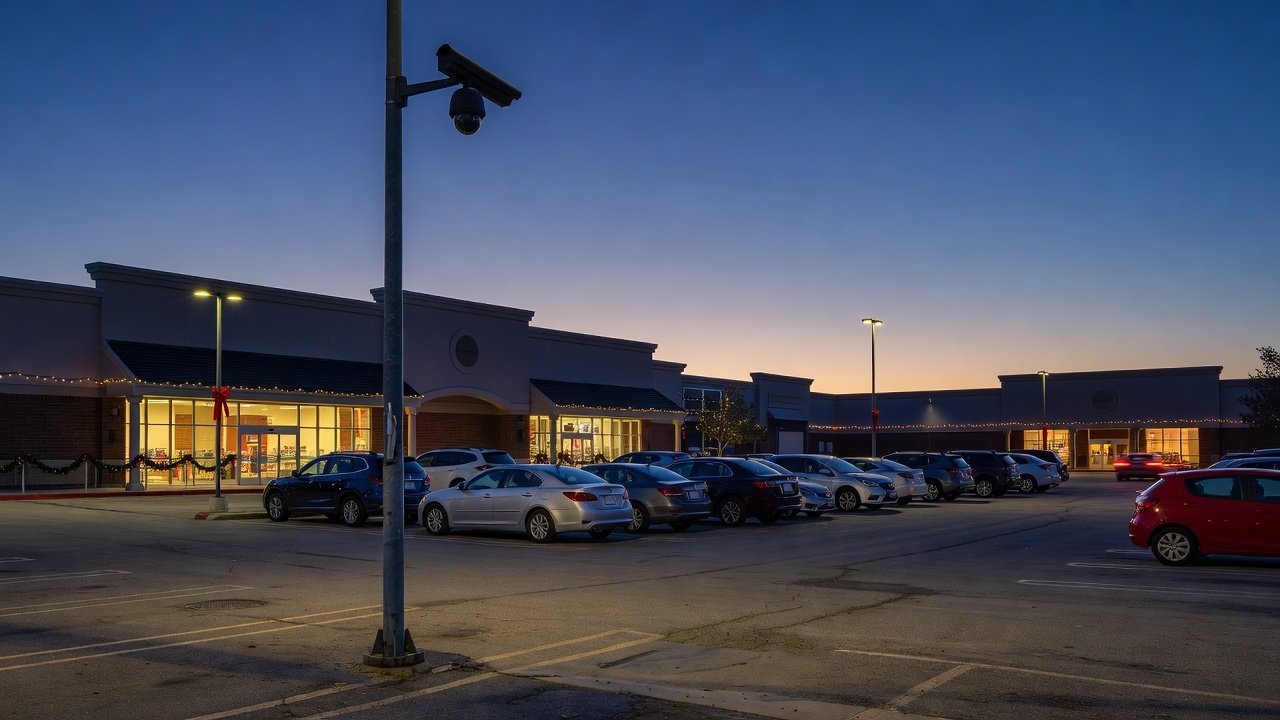
Organized retail crime is an analytics problem before it is a policing problem. A single theft of $400 in merchandise from one store is a misdemeanor on a patrol officer’s desk. Twenty of them across six jurisdictions, committed by the same crew and resold through the same fence, is a felony case, but only if someone connects the reports. The agencies seeing results in the fourth quarter are the ones that built that connective layer before the holiday traffic arrived.
The baseline: less theft, harder cases
The data picture is not the surge story that often accompanies the season. The Council on Criminal Justice’s year-end 2025 update found that reported shoplifting fell about 10 percent in 2025 compared with 2024 in the 21 cities with available data, and sat about 4 percent below 2019. The council cautions that these figures rely on incidents reported to police, that retailers differ in how often they report, and that the numbers almost certainly undercount total shoplifting. The figures are also preliminary. Earlier council data showed shoplifting rising in 2024, and a Flock Safety guide cites the council in noting higher shoplifting in November and December of that year.
A falling average does not mean falling difficulty. The harder cases are the organized ones, which depend on a pattern across locations rather than on volume at any one store. That is where analytics earns its keep.
What agencies actually build
Cross-jurisdiction case linking
The core tool is a shared view of incident reports so that analysts can match suspects, vehicles, methods, and merchandise across agency lines. Ohio’s August 2026 approach is one example: a new central Ohio task force led by the Franklin County Sheriff’s Office operates under the attorney general’s organized crime commission, and a county prosecutor’s office said combining thefts across jurisdictions helps build stronger cases. Ohio’s FORCE Act allows theft by the same person across a 12-month period to be aggregated, and makes theft of $7,500 or more a third-degree felony. Illinois uses a statewide task force that includes retailers, online marketplaces, law enforcement, and state’s attorneys. Aggregation statutes matter because they turn linked small incidents into a charge worth prosecuting.
At the federal level, the Combating Organized Retail Crime Act (H.R. 2853) passed the House 348 to 60 in May 2026, according to the National Association of Convenience Stores and sponsor releases, and awaits Senate action. It would establish an Organized Retail and Supply Chain Crime Coordination Center within Homeland Security Investigations. Until enacted, agencies should not plan around it.
Retailer video and evidence packages
Retail loss-prevention teams are often the first analysts on a case. They compile video clips, timestamps, and cross-store activity into case files. Vendors, including Flock Safety, promote shared case-file tools; the benefits they cite, such as clearer documentation for prosecutors, are vendor claims, and independent evaluation of arrest rates is scarce. For the agency, the practical questions are about admissibility and usefulness:
- Time accuracy. Camera clocks drift. Ask retailers to record offsets and export with original timestamps intact.
- Original format. Screen recordings of playback lose metadata. Request native exports with the viewer software if needed.
- Foundation witnesses. The National District Attorneys Association’s retail theft resources include a notarized business-records affidavit for authenticating video and reports. Have the retailer’s custodian identified before the case reaches a prosecutor.
- Dollar values. Felony thresholds depend on documented loss, so insist on itemized valuation tied to inventory records.
- Chain of custody. Log who received each file, when, and how it was stored.
Plate readers and vehicle data
License plate readers are the most common technology link between a store camera and a suspect vehicle. Fairfax County, Virginia, officials have described using plate data to track vehicles in ORC incidents across multiple jurisdictions, an account given at a vendor-hosted conference panel. The caution is that plate hits are leads, not identifications; they require corroboration before an arrest or warrant.
The privacy and governance questions
Data sharing is where ORC programs draw criticism, and the criticism is specific. The Electronic Frontier Foundation has argued that plate readers can track people’s movements intrusively and that businesses can pass the data to outside parties. Large retailers, including Home Depot, have said they do not give federal law enforcement access to their readers, according to reporting on retailer practices. The Los Angeles inspector general found that plate readers aided in recovering at least 337 stolen vehicles and led to dozens of felony arrests, but also recommended pausing new deployments pending public input because of privacy and sharing concerns.
Minnesota’s state-mandated 2026 audits of agency plate-reader sharing offer a usable template: written requests citing a factual basis and a case number, and periodic review of whether each shared query had a justification. Those audits cover police use, not retailer systems, so no equivalent evidence exists for retailer-operated data.
A governance checklist for ORC data sharing should cover the following.
- Purpose limitation. State in the agreement that shared data is used only for retail theft investigations, and prohibit secondary uses such as immigration enforcement.
- Retention. Set a short default for non-hit data and a hold process for case evidence.
- Access logging and audit. Record who queried what, under which case number, and review the logs on a schedule.
- Partner agreements. Document what each retailer shares, with whom, and under what terms, and publish the list of participating partners where policy allows.
- Accuracy review. Require human verification of any automated match before it influences an arrest, and track false-match rates.
The practical takeaway
Before Black Friday, name an analyst responsible for linking retail cases across jurisdictions, agree with your top retailers on a standard evidence package, and set written rules for any plate-reader or camera sharing. Measure what the effort produces, including cases aggregated, felony charges filed, and property recovered, so next year’s investment rests on your own data rather than a vendor’s. Past the holidays, publish the numbers; transparency is what keeps the sharing arrangements defensible when someone asks what they were used for.